Things to Do in Chad in April
April weather, activities, events & insider tips
Low Season · Budget Friendly
April Weather in Chad
Long-run averages for April in N'Djamena
107°F (42°C)
High Temp
82°F (28°C)
Low Temp
0.0 inches (0 mm)
Rainfall
13%
Humidity
12
Sunny-Day UV
⚠ April brings brutal heat. Average highs hit 42°C (107°F), spiking higher when the air stills. Heatstroke and severe dehydration pose real medical risks for any outdoor exertion between 10 AM and 4 PM. Carry at least four litres (one gallon) of water daily. Drink it all. Add more if you are moving.
⚠ Harmattan dust lingers into early April, cutting visibility and fouling air quality across N'Djamena and the northern Saharan reaches. Fine sand works its way into lungs, electronics, even sealed bags. Wear a dust mask. A dampened shemagh over nose and mouth works when gusts hit.
⚠ The UV index hits extreme levels on clear April days. At 13% humidity, skin burns fast. You will not see sweat. That is the danger. Unprotected skin can blister with second-degree burns within thirty to forty-five minutes of midday sun. Cover up. Reapply sunscreen. Seek shade.
Making the most of April in Chad? Browse tours and activities in Chad on GetYourGuide.
Is April Right for You?
Weigh the advantages and considerations before booking
Advantages
- + Zakouma National Park hits its peak game-viewing window in April. The last seasonal waterholes shrink to concentrated pools, and elephants, giraffes, hartebeest, and lions converge in numbers you simply will not see once the rains scatter them in June. The park's elephant population, which dropped to around 450 in 2010 and has since climbed past 600, is most reliably spotted now along the Salamat floodplain edges where the mud still holds moisture.
- + Zero rainfall and 13% humidity keep the roads into Ennedi and the Tibesti approaches passable. Chad's unpaved routes turn into impassable clay channels once the wet season arrives in late May, so April is your last reliable month for overland expeditions into the Saharan north without risking a three-day bog-down.
- + Tourist numbers in Chad are low year-round, rarely exceeding a few hundred visitors at any one time across the entire country. In April, the heat thins that number further, meaning Zakouma camps, Ennedi campsites, and N'Djamena's Chad National Museum feel close to private. You will likely be the only foreigner at Gaoui village on any given morning.
- + April falls after Ramadan in 2027, so restaurants, markets, and local services in N'Djamena operate on full daytime schedules. The Grand Marche hums with its normal rhythm, food stalls along Avenue Charles de Gaulle serve grilled capitaine fish from mid-morning, and the post-Ramadan mood carries a looseness that makes conversation with locals easier than during the fasting weeks.
Considerations
- − The heat is not an inconvenience. It is the defining condition of your trip. N'Djamena's April average high of 42°C (107°F) with lows that only drop to 28°C (82°F) means the air never fully cools, even at 3 AM. The dryness helps. But sustained exposure above 40°C (104°F) narrows the window for any physical activity to roughly 6 AM through 9:30 AM and then again after 4:30 PM. Midday outdoors is not uncomfortable. It is medically inadvisable without serious precautions.
- − Infrastructure remains sparse outside N'Djamena. Internal flights are unreliable and roads to Zakouma National Park from the capital take a full day's drive on potholed laterite routes that rattle your spine. Ennedi expeditions require multi-day overland logistics with fuel and water resupply planned in advance. There is no Uber. No reliable ride-hailing exists. Taxis in N'Djamena negotiate by the trip with no meters.
- − Chad requires a visa for nearly all nationalities, and the process is slow and paperwork-heavy. The embassy in your home country may take weeks. Health preparations are equally demanding: yellow fever vaccination is mandatory for entry, and malaria prophylaxis is strongly advised even in the dry season. Medical facilities outside the capital are rudimentary at best, and evacuation insurance is not optional. It is essential.
Short on time in April? See day trips around Chad on GetYourGuide.
Best Activities in April
Top things to do during your visit
Zakouma National Park Wildlife Safari
April is arguably the single best month for Zakouma. The park's waterholes have been evaporating since October, and by now the remaining pools along the Salamat and Bahr Salamat floodplains draw Chad's flagship wildlife like magnets. Herds of several hundred elephants gather at dawn near the Tinga camp area, kicking up red dust that catches the low sun. Cob antelope, tiang, and roan antelope crowd the grasslands in concentrations that rival East Africa's better-known parks, with none of the vehicle queues. The dry grass stands short enough that predator sightings, lion prides, are far more likely than during the green season when the savanna grows head-high. Morning game drives start at first light, around 5:45 AM, when the air still carries some coolness and the animal activity peaks. By 10 AM, the heat forces most creatures into shade and you will be grateful to retreat to camp yourself. Afternoon drives resume around 4 PM and run until sunset paints the baobabs orange.
Booking Tip: Zakouma safaris require advance coordination with licensed operators who hold park concession permits, typically booked two to three months ahead for April departures. The park has limited camp capacity, so availability narrows fast. Look for operators who include the overland transfer from N'Djamena or arrange the charter flight, as logistics are half the challenge. See current options in the booking section below.
Ennedi Plateau Desert Expedition
The Ennedi massif in northeastern Chad is one of the most extraordinary landscapes on Earth, and April's dry conditions keep the sandy tracks navigable for four-wheel-drive convoys. Sandstone arches, some spanning 30 metres (98 feet) or more, rise from canyon floors where prehistoric rock art depicting cattle, giraffes, and human figures dates back eight thousand years. The Aloba Arch, towering roughly 120 metres (394 feet), dwarfs anything in the American Southwest. The air at this altitude sits a few degrees cooler than N'Djamena, though still hot by any normal measure, and the rock formations cast afternoon shadows that create pockets of relief. Mornings in the canyons carry a dry mineral smell, the stone still cool to the touch from the night, and the silence is the kind that makes your ears ring. The guelta of Archei, a permanent water pool wedged between cliff walls, still holds a small population of Saharan crocodiles, relics from when this desert was green. Getting there requires a multi-day overland expedition from Faya-Largeau, typically seven to twelve days round trip, with camping under skies so clear the Milky Way looks solid.
Booking Tip: Ennedi expeditions are serious logistical undertakings. Book with operators who provide their own fuel resupply chain, satellite communication, and experienced Toubou or Gorane guides who know the terrain intimately. Three months lead time is reasonable for April departures. Vehicle condition matters enormously on these tracks, so ask about fleet age and maintenance. Current guided expedition options appear in the booking section below.
Gaoui Village and Sao Civilization Cultural Tour
Gaoui sits roughly 10 km (6.2 miles) northeast of central N'Djamena along the Chari River, and a half-day visit here is the most accessible cultural excursion from the capital. The village preserves the material legacy of the Sao civilization, which flourished around Lake Chad from the sixth century onward, and the clay architecture of the traditional chiefs' compounds, with their thick earthen walls and low doorways, still follows building principles that predate the arrival of Islam in the region. Local artisans work terracotta in techniques handed down through Sao lineage, shaping figures and vessels whose forms echo the archaeological pieces displayed at the Chad National Museum back in N'Djamena. In April's heat, the visit works best in the early morning when the river breeze carries the smell of wet clay and woodsmoke from cooking fires, and the light falls low enough to photograph the relief patterns on the compound walls. The village chief typically receives visitors personally. The conversation, usually through a local guide who translates from Arabic or Sara, tends toward the kind of unhurried oral history you cannot find in any book.
Booking Tip: Day tours to Gaoui run from N'Djamena and are best arranged through local cultural tour operators a few days in advance. The visit pairs naturally with the Chad National Museum in the capital for a full day of Sao civilization context. Licensed guides who speak French and local languages make the difference between watching architecture and understanding it. Check current cultural tour options in the booking section below.
Lake Chad Shoreline and Fishing Village Excursions
Lake Chad in April is at its annual low, which sounds like a drawback but exposes the layered reality of this shrinking inland sea in ways the high-water months obscure. The lake's surface, which once covered 25,000 square kilometres (9,650 square miles) and has contracted dramatically over decades, fragments into channels, islands, and marshy pockets where Buduma and Kanembu fishing communities work from wooden pirogues using techniques largely unchanged for centuries. The smell of drying fish, laid out on reed racks in the sun, carries across the flat terrain well before you reach the villages. Birdlife concentrates heavily along the remaining water channels, with pelicans, herons, and migrating waders packed into narrow corridors. The boat ride through the papyrus channels has a quiet, end-of-the-world quality, the water glassy and brown, the horizon flat in every direction. April's low water does mean some channels become too shallow for motorized boats, so pirogue travel with local paddlers becomes the default. This is slower. It lets you hear the fish eagles and the slap of water against the hull.
Booking Tip: Lake Chad excursions depart from Bol or from villages accessible via the N'Djamena to Bol road, a full day's drive. Arrange through operators familiar with current water levels, as navigable routes shift yearly. A two to three day itinerary gives enough time to reach the fishing islands and return without rushing. Confirm vehicle and boat arrangements at least two weeks ahead. Browse available Lake Chad region tours in the booking section below.
N'Djamena City Cultural Walking Tour
N'Djamena is not a city that reveals itself through monuments. It reveals itself through rhythm. An early morning walk through the Grand Marche, before the heat clamps down, puts you in the middle of Chad's crossroads identity: Saharan traders selling indigo cloth and tea alongside Sara women from the south with baskets of dried okra and shea butter, the air sharp with ground ginger and the low hum of haggling in Arabic, French, and Sara. The Chad National Museum, housed in a modest building near the presidential quarter, holds Sao terracotta pieces and paleontological finds from the Sahara, including hominid skull fragments that rewrite timelines. The museum is small enough to cover in an hour. This is about right before the heat drives you indoors. The riverfront along the Chari, near the old bridge, has a late-afternoon life of its own: fishermen hauling nets, children swimming in the shallows, and the far bank of Cameroon visible across the brown water. April evenings cool enough by 7 PM to walk the streets near the cathedral quarter, where grilled brochettes of beef and mutton smoke on charcoal braziers and cold drinks appear at plastic tables on the sidewalk.
Booking Tip: Half-day guided walking tours of N'Djamena can be arranged through local operators or hotel concierges with a day or two notice. A French-speaking guide is essential for navigating the Grand Marche and museum context. Morning departures before 8 AM beat the worst heat. See current N'Djamena tour offerings in the booking section below.
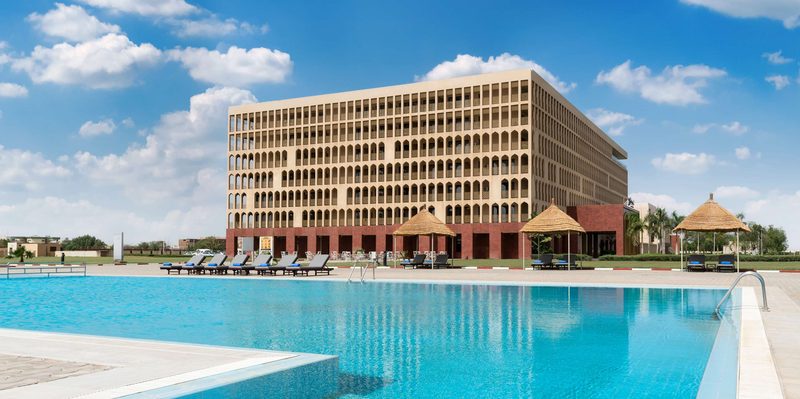
Where to Stay in Chad in April
Hand-picked hotels across price tiers for April travellers.
Public Holidays in April
Dates that affect opening hours, transport and crowds
Easter Monday
Observed nationwide as a public holiday.
Packing Checklist
Bookmark this page — your progress is saved between visits
Need the full list with shopping links?
Climate-specific gear, brand recommendations, and what to leave at home.
View Chad Packing List →Essential Tips
Insider knowledge and common pitfalls to avoid
Insider Knowledge
The real window for physical activity in April Chad is narrow. Work from sunrise to about 9:30 AM. Then again from roughly 4:30 PM to dark. Locals disappear indoors at midday. Follow their lead without guilt. Plan two short bursts daily. Skip the long haul. Travelers who push through midday get into trouble. They feel they are wasting time. They are wrong.
French is your operating language in Chad. English will not serve you. Even basic French transforms interactions at the Grand Marche, with border officials, and with guides. Weak French? Carry a pocket phrasebook. Try anyway. This earns more goodwill than slow English. Arabic, specifically Chadian Arabic, is the street language in N'Djamena and the north. Learn greetings. 'Salaam aleikum' and 'iyeh' for yes signal respect. This opens doors.
N'Djamena's grilled capitaine defines the city. This Nile perch comes from the Chari and Logone rivers. It arrives whole on a metal plate. The skin is charred and crackling. The flesh is white and firm. It comes with sharp chili paste and boule, the starchy millet ball. Tear it with your right hand. Use it to pinch the fish. The riverside stalls near the old bridge serve it best. Go in late afternoon. Cooking fires start then. The smell of charcoal and roasting fish drifts across the water. Eat with your hands. Everyone does.
Chad requires a permit to photograph in many areas. This is separate from your visa. Restricted zones include government buildings, military installations, and sometimes markets. Local authority mood matters that day. Carry your passport and photography permits always. Police and military checkpoints are routine outside N'Djamena. Stay calm. Have documents ready. Greet in French or Arabic. This resolves nearly all stops in minutes. Arguing achieves nothing good. Showing frustration achieves less.
Avoid These Mistakes
Never underestimate the heat. Do not schedule full days outdoors. First-timers see 42°C (107°F) as just another hot day. They plan accordingly. This is a mistake. Extreme temperature, low humidity, and direct equatorial sun combine dangerously. Heatstroke can develop within an hour of sustained exertion. By 11 AM in April, the ground radiates heat upward. The air shimmers visibly. Midday is for rest. Read. Sit under a fan with cold water. Live to see evening.
Never arrive without confirmed onward logistics. Chad is not a place to land and figure it out. Internal transport, park access, guide arrangements, and fuel supplies all need advance coordination. Showing up in N'Djamena to book a Zakouma safari or Ennedi expedition wastes days. Your itinerary will suffer. Confirm your ground operator, vehicle, and permits before you board the flight. No exceptions.
Do not pack for a beach holiday. Yes, the temperatures are high. The heat is dry. The sun is extreme. But Chad demands modest, covering clothing in neutral tones. Shorts and tank tops draw unwanted attention in this Muslim capital. They offer no sun protection. They fail in thorny bush terrain on safari. Wear lightweight long trousers and long-sleeved shirts in breathable fabric. This is what locals wear. This is what experienced travelers wear.
Ready to plan your trip to Chad?
Now that you've got the research covered, here's where to go next.
Explore More Activities in Chad
Didn't see anything interesting yet?
Browse Viator's full catalog of tours, day trips, food experiences, and private guides in Chad.
See All Chad Tours on Viator